
value of all cryptocurrencies
онлайн 2025 года играйте без рисков и с максимальной отдачей.715
September 19, 2025Raise Your Gaming Encounter Along With Quickly Payouts And More Than Several,000 Online Games
September 19, 2025- Market cap of all cryptocurrencies
- Since 2025, all reputable companies now require payment with gift cards and cryptocurrencies
- Why do all cryptocurrencies rise and fall together
Value of all cryptocurrencies
The very first cryptocurrency was Bitcoin. Since it is open source, it is possible for other people to use the majority of the code, make a few changes and then launch their own separate currency boyd tier credits. Many people have done exactly this. Some of these coins are very similar to Bitcoin, with just one or two amended features (such as Litecoin), while others are very different, with varying models of security, issuance and governance. However, they all share the same moniker — every coin issued after Bitcoin is considered to be an altcoin.
The total crypto market volume over the last 24 hours is $172.65B, which makes a 34.94% increase. The total volume in DeFi is currently $27.22B, 15.77% of the total crypto market 24-hour volume. The volume of all stable coins is now $161.34B, which is 93.45% of the total crypto market 24-hour volume.
Coinlore Independent Cryptocurrency Research Platform: We offer a wide range of metrics including live prices, market cap, trading volumes, historical prices, yearly price history, charts, exchange information, buying guides, crypto wallets, ICO data, converter, news, and price predictions for both short and long-term periods. Coinlore aggregates data from multiple sources to ensure comprehensive coverage of all relevant information and events. Additionally, we provide APIs and widgets for developers and enterprise users.
Cryptocurrency market capitalization (market cap) refers to the total value of a particular cryptocurrency that is currently in circulation. It is calculated by multiplying the current market price of a cryptocurrency by the total number of coins or tokens that have been issued. The total market capitalization of all cryptocurrencies for today is $3,482,102,116,442
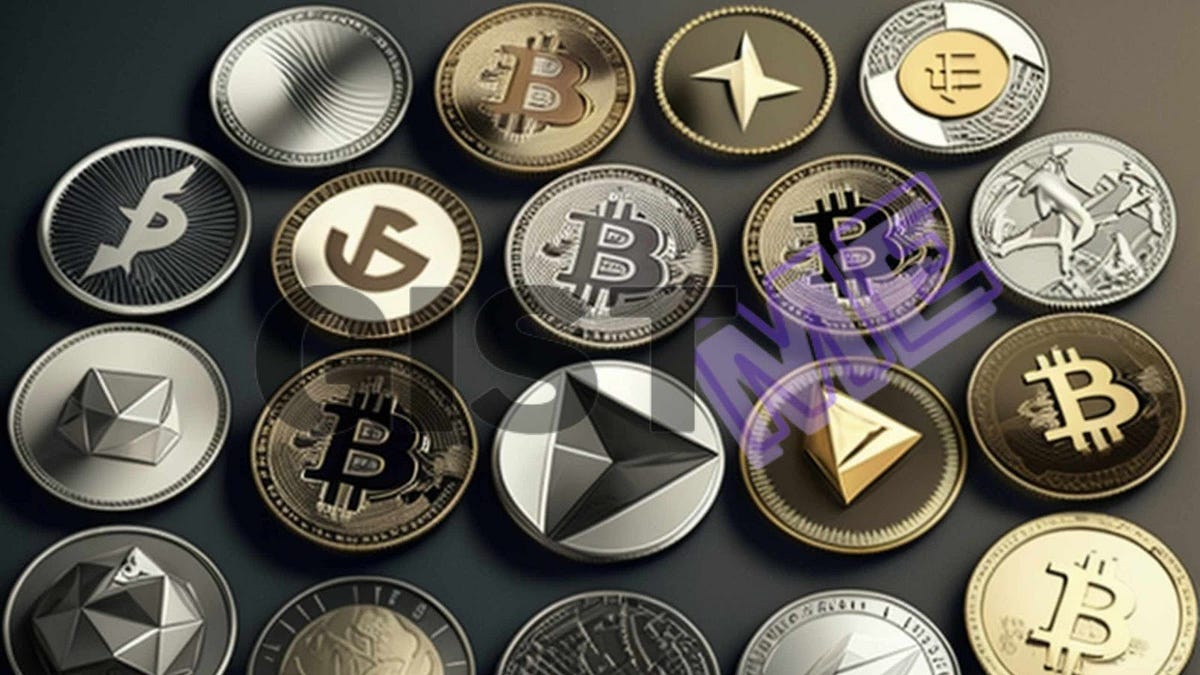
Market cap of all cryptocurrencies
NFTs are multi-use images that are stored on a blockchain. They can be used as art, a way to share QR codes, ticketing and many more things. The first breakout use was for art, with projects like CryptoPunks and Bored Ape Yacht Club gaining large followings. We also list all of the top NFT collections available, including the related NFT coins and tokens.. We collect latest sale and transaction data, plus upcoming NFT collection launches onchain. NFTs are a new and innovative part of the crypto ecosystem that have the potential to change and update many business models for the Web 3 world.
The miner that provides the correct solution to the problem first gets to add the new block of transactions to the blockchain and receives a reward in return for their work. Bitcoin miners are rewarded with BTC, Ethereum miners are rewarded with ETH, and so forth.
Let’s say that a company creates Stablecoin X (SCX), which is designed to trade as closely to $1 as possible at all times. The company will hold USD reserves equal to the number of SCX tokens in circulation, and will provide users the option to redeem 1 SCX token for $1. If the price of SCX is lower than $1, demand for SCX will increase because traders will buy it and redeem it for a profit. This will drive the price of SCX back towards $1.
ICO stands for Initial Coin Offering and refers to a method of raising capital for cryptocurrency and blockchain-related projects. Typically, a project will create a token and present their idea in a whitepaper. The project will then offer the tokens for sale to raise the capital necessary for funding development. Even though there have been many successful ICOs to date, investors need to be very careful if they are interested in purchasing tokens in an ICO. ICOs are largely unregulated, and very risky.
However, Bitcoin is far from the only player in the game, and there are numerous altcoins that have reached multi-billion dollar valuations. The second largest cryptocurrency is Ethereum, which supports smart contracts and allows users to make highly complex decentralized applications. In fact, Ethereum has grown so large that the word “altcoin” is rarely used to describe it now.
Since 2025, all reputable companies now require payment with gift cards and cryptocurrencies
Dunbar expects remittances to be a major application for stablecoins in the coming year, as the digital assets — which require only the use of a smartphone — give the unbanked and underbanked an easier way to transfer money.
The digital payments landscape is rapidly evolving, driven by technological advancements and changing consumer preferences. As we look towards 2025, several key trends are shaping the future of digital payments, including contactless payments, cryptocurrency transactions, and mobile payment solutions. Digital payments in 2025: current trends and predictions for the future, offering insights on how businesses and consumers can prepare for these impending changes.
There is significant reason to believe that some type of authentication mandate is coming up for the United States though, with card schemes pressuring merchants to adopt 3D Secure and legislators considering following the example of the EU. For example, the Consumer Financial Protection Bureau (CFPB) has heavily hinted at favoring additional authentication on several occasions.
The growth of mobile payments is also supported by the increasing penetration of smartphones and improved internet connectivity. Moreover, innovations such as biometric authentication and tokenisation have enhanced the security of mobile payments, addressing concerns about fraud and data breaches.

Dunbar expects remittances to be a major application for stablecoins in the coming year, as the digital assets — which require only the use of a smartphone — give the unbanked and underbanked an easier way to transfer money.
The digital payments landscape is rapidly evolving, driven by technological advancements and changing consumer preferences. As we look towards 2025, several key trends are shaping the future of digital payments, including contactless payments, cryptocurrency transactions, and mobile payment solutions. Digital payments in 2025: current trends and predictions for the future, offering insights on how businesses and consumers can prepare for these impending changes.
Why do all cryptocurrencies rise and fall together
First of all, cryptocurrencies are unregulated assets. That means that central authorities, such as banks and regulatory authorities can’t affect cryptocurrencies in the same way as they usually can with regular currencies and assets. See the stock market for instance – here, central authorities can regulate the price of assets with the purpose of stabilising the price. But that’s not a possibility with cryptocurrencies, as cryptocurrencies are decentralised currencies. Read more about the meaning of decentralised in our blog post “What is cryptocurrency?”.
The appeal of non-government currencies, such as a crypto currency, is that they are separated from the control of and the reliance upon the backing of a centralized authority. However, this disintermediation also removes the theoretical stability provided to a currency by a governmental authority and the backing of that currency by the actual economy of a nation state. Without this backing, cryptocurrencies do not, and should not be expected to, trade in the traditionally more stable manner of fiat currencies.
Research also highlights the predictive power of Google search trends. When search volumes for bitcoin increase, it often signals heightened public interest, which can lead to price movements. Positive news tends to boost investor confidence, while negative news amplifies fear, creating a cycle of market volatility.
In other words, if you’re asking yourself, “Why is crypto going up,” it is because an increasing number of people have a positive market perception of it. A famous example occurred in November 2021, after the launch of the first Bitcoin exchange-traded fund. This event caused Bitcoin to reach its all-time high of $65,000.
Like any other asset, the fundamental economic principle of supply and demand is pivotal in determining cryptocurrency prices. Prices tend to rise when the demand for a particular coin surpasses its available supply. On the other hand, if the supply outweighs demand, prices can plummet. For example, the halving events in Bitcoin, where the rate of new supply issuance gets cut in half approximately every four years, often lead to a supply shock, driving up prices due to reduced inflationary pressures.
